To our Shareholders
“SUSTAINABLE, SAFE AND INDIVIDUAL MOBILITY – THAT IS OUR PROMISE TO EVERYONE. WE ARE REINVENTING VOLKSWAGEN TO DELIVER ON OUR PROMISE IN THE DIGITAL ERA.”
Matthias Müller
What you'll find in this chapter:

“SUSTAINABLE, SAFE AND INDIVIDUAL MOBILITY – THAT IS OUR PROMISE TO EVERYONE. WE ARE REINVENTING VOLKSWAGEN TO DELIVER ON OUR PROMISE IN THE DIGITAL ERA.”
Matthias Müller
What you'll find in this chapter:
MAN presented its new commercial vehicles and engines during the reporting year, including its first ever van, the MAN TGE. MAN’s new future program, launched in 2015, is making a substantial contribution to the brand’s success.
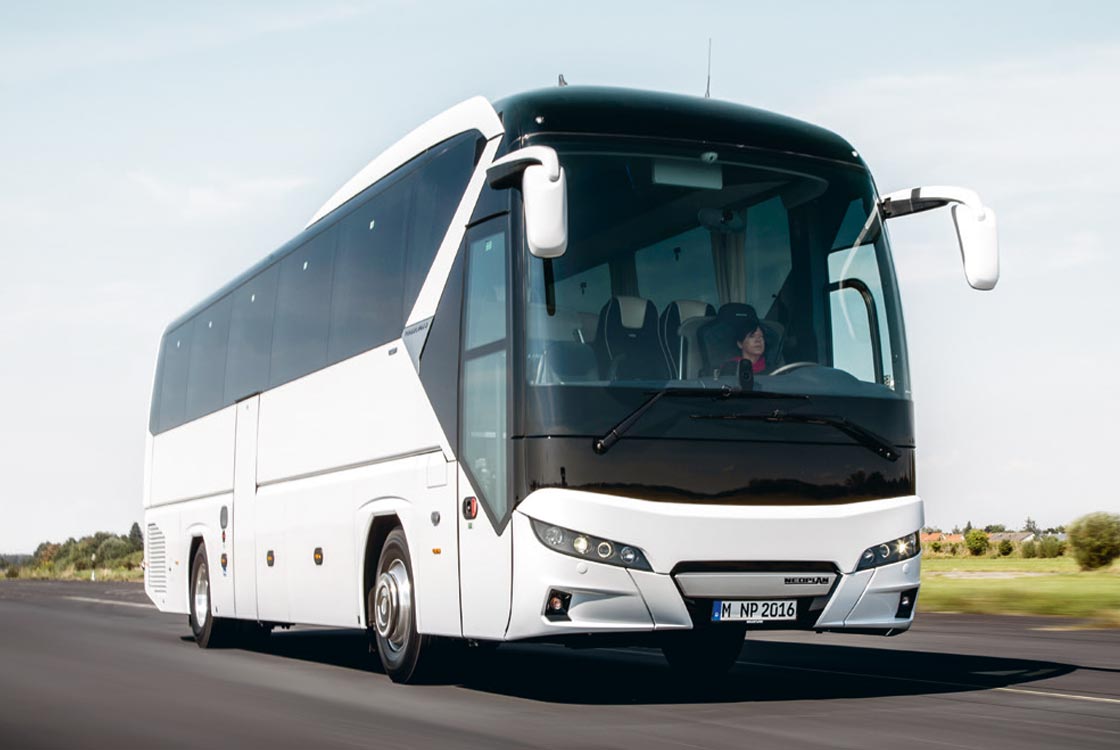
In 2016, MAN presented the new TGL, TGM, TGS and TGX series vehicles with optimized powertrains. The D26 and D38 engines offer increased torque and an extra 20 PS of power output while also reducing fuel consumption. The 471 kW (640 PS) top-of-the-range version of the new D38 engine, which was previously reserved for heavy-duty vehicles, is now available for almost all versions of the MAN TGX D38. It generates up to 3,000 Nm of torque even at low revs. With the world premiere of the MAN TGE, the long-established, Munich-based brand has entered the van market. From 2017, this will make MAN a comprehensive provider for all transport needs from 3 to 250 tonnes. The newly unveiled NEOPLAN Tourliner rounds off MAN’s bus portfolio with an entry model for the premium coach segment. The Power Engineering Business Area commissioned a gas-fired power station in China and a diesel power plant in Africa during the reporting year. A comprehensive package of measures was initiated to safeguard the future viability of the business area.
The economic environment remained challenging for MAN in the 2016 fiscal year. In South America, demand was down on the weak prior-year level. Meanwhile, the European commercial vehicle market continued to recover. Orders received by MAN were 2.3% down on 2015 at 105 thousand vehicles. Deliveries remained on a par with the previous year at 102 (102) thousand commercial vehicles, of which 10 (10) thousand were buses.
MAN produced 102 (101) thousand commercial vehicles in 2016, of which 10 (10) thousand were buses.
Incoming orders in the Power Engineering Business Area fell to €3.3 (3.4) billion as a result of the continued difficult situation in the shipping industry, economic difficulties in developing countries and emerging markets and the low price of oil.
MAN Commercial Vehicles’ sales revenue in 2016 stood at €10.0 billion, up 0.5% on the previous year. Operating profit before special items rose to €230 (−4) million. The operating return on sales before special items was 2.3 (0.0)%. Volume effects, improved margins in Europe and the future programs introduced had a positive effect. Restructuring measures in South America led to special items of €−0.1 billion; in the previous year, special items of €−0.2 billion were incurred for restructuring measures in Europe.
Sales revenue in the Power Engineering segment amounted to €3.6 (3.8) billion. There was a volume- and margin-related decline in operating profit before special items to €194 (283) million. The operating return on sales before special items was 5.4 (7.5)%. Restructuring measures led to special items of €−0.2 billion.
102 thousand
Commercial Vehicles delivered in 2016
 Download Download |
PRODUCTION |
||||
|---|---|---|---|---|
Units |
2016 |
2015 |
||
|
|
|
||
Trucks |
91,902 |
90,581 |
||
Buses |
10,225 |
10,244 |
||
|
102,127 |
100,825 |
||
| Download |
MAN BRAND |
||||||
|---|---|---|---|---|---|---|
|
2016 |
2015 |
% |
|||
|
|
|
|
|||
Commercial Vehicles |
|
|
|
|||
Orders received (thousand units) |
105 |
108 |
−2.3 |
|||
Deliveries |
102 |
102 |
−0.2 |
|||
Vehicle sales |
102 |
102 |
−0.2 |
|||
Production |
102 |
101 |
+1.3 |
|||
Sales revenue (€ million) |
10,005 |
9,958 |
+0.5 |
|||
Operating result before special items |
230 |
−4 |
x |
|||
as % of sales revenue |
2.3 |
0.0 |
|
|||
|
|
|
|
|||
Power Engineering |
|
|
|
|||
Sales revenue (€ million) |
3,593 |
3,775 |
−4.8 |
|||
Operating result before special items |
194 |
283 |
−31.4 |
|||
as % of sales revenue |
5.4 |
7.5 |
|
|||
NEOPLAN Tourliner
FURTHER INFORMATION
www.man.eu
The value added statement indicates the added value generated by a company in the past fiscal year as its contribution to the gross domestic product of its home country, and how it is appropriated. The value added generated by the Volkswagen Group in the year under review was up 20.6% year-on-year, mainly as a result of considerably lower negative special items in connection with the diesel issue. Added value per employee increased to €94.5 thousand (+18.0%) in 2016. Employees in the passive phase of their partial retirement as well as vocational trainees are not included in the calculation.
 Download Download |
VALUE ADDED GENERATED BY THE VOLKSWAGEN GROUP |
||||||||
|---|---|---|---|---|---|---|---|---|
Source of funds in € million |
2016 |
|
2015 |
|
||||
|
|
|
|
|
||||
Sales revenue |
217,267 |
|
213,292 |
|
||||
Other income |
17,907 |
|
20,092 |
|
||||
Cost of materials |
−140,307 |
|
−143,700 |
|
||||
Depreciation and amortization |
−20,924 |
|
−19,693 |
|
||||
Other upfront expenditures |
−23,990 |
|
−28,578 |
|
||||
Value added |
49,953 |
|
41,413 |
|
||||
| Download |
|
|
|
|
|
||||
Appropriation of funds in € million |
2016 |
% |
2015 |
% |
||||
|---|---|---|---|---|---|---|---|---|
|
|
|
|
|
||||
to shareholders (dividend, 2016 dividend proposal) |
1,015 |
2.0 |
68 |
0.2 |
||||
to employees (wages, salaries, benefits) |
37,017 |
74.1 |
36,268 |
87.6 |
||||
to the state (taxes, duties) |
3,486 |
7.0 |
3,033 |
7.3 |
||||
to creditors (interest expense) |
4,070 |
8.1 |
3,472 |
8.4 |
||||
to the Company (reserves) |
4,365 |
8.7 |
−1,428 |
−3.4 |
||||
Value added |
49,953 |
100.0 |
41,413 |
100.0 |
The momentum of the global economy is expected to be somewhat stronger in 2017 than in the previous year. We assume that global demand for vehicles will be mixed and increase at a slightly slower rate than in the reporting period. Thanks to its brand diversity, global presence and pioneering technologies, the Volkswagen Group is well prepared to deal with the diverse conditions in the regional markets.
In the following, we describe the expected development of the Volkswagen Group and the general framework for its business activities. Risks and opportunities that could represent a departure from the forecast trends are presented in the Report on Risks and Opportunities.
Our assumptions are based on current estimates by third-party institutions. These include economic research institutes, banks, multinational organizations and consulting firms.
The Volkswagen Group’s Board of Management expects the global economy to record slightly higher growth in 2017 than in the previous year. We believe risks will arise from protectionist tendencies, turbulence in the financial markets and structural deficits in individual countries. In addition, growth prospects will continue to be hurt by geopolitical tensions and conflicts. We expect the economic upturn to continue in the large majority of industrialized nations, with stable rates of expansion overall. Most emerging markets will probably see faster growth than in the previous year. We expect the strongest rates of expansion in Asia’s emerging economies.
The trend in the automotive industry closely follows global economic developments. We expect competition in the international automotive markets to intensify further.
We expect trends in the passenger car markets in the individual regions to be mixed in 2017. Overall, growth in global demand for new vehicles will probably be slower than in the reporting period. We anticipate that sales volume in Western Europe and the German passenger car market will be slightly lower than in the previous year. In the Central and Eastern European markets, demand for passenger cars should exceed the weak prior-year figure. We expect that the market volume for passenger cars and light commercial vehicles (up to 6.35 tonnes) in North America in 2017 will be a little lower than the prior-year figure. On the South American market for passenger cars and light commercial vehicles, overall demand is expected to rise slightly compared with the previous year. The passenger car markets in the Asia-Pacific region look set to continue their growth trajectory at a slightly weaker pace.
We expect trends in the markets for light commercial vehicles in the individual regions to be mixed again in 2017. Overall, we envisage a slight increase in demand.
In the markets for mid-sized and heavy trucks that are relevant for the Volkswagen Group, new registrations in 2017 are set to rise slightly above the prior-year level, while a moderate year-on-year increase is expected in new registrations of buses in the relevant markets.
We believe that automotive financial services will continue to be very important for vehicle sales worldwide in 2017.
The Volkswagen Group is well positioned to deal with the mixed developments in automotive markets around the world. Our broad, selectively expanded product range featuring the latest generation of engines as well as a variety of alternative drives puts us in a good position globally compared with our competitors. The Group’s further strengths include in particular its unique brand portfolio, its steadily growing presence in all major world markets and its wide selection of financial services. Our range of models covers almost all key segments, with offerings from small cars to super sports cars in the passenger car segment, and from pickups to heavy trucks and buses in the commercial vehicles segment, as well as motorcycles. The Volkswagen Group brands will further optimize their vehicle and drivetrain portfolio in 2017 to concentrate on the most attractive and fastest-growing market segments.
The Group’s new structure with more decentralized responsibility will strengthen our brands and regions and increase our proximity to customers. In addition, we are working to make even more focused use of the advantages of our multibrand group by continuously developing new technologies and our toolkits. Our goal is to offer all customers the mobility and innovations they need, sustainably strengthening our competitive position in the process.
We expect that deliveries to customers of the Volkswagen Group in 2017 will moderately exceed the prior-year volume amid persistently challenging market conditions.
Challenges will arise particularly from the economic situation, intense competition in the market, exchange rate volatility and the diesel issue.
We expect the sales revenues of the Volkswagen Group and of the Passenger Cars Business Area and Commercial Vehicles Business Area to grow up to 4% year-on-year in 2017. In terms of the Group’s operating result, we anticipate an operating profit on sales of between 6.0% and 7.0% in 2017. In the Passenger Cars Business Area, we expect an operating return on sales in the range of 6.5 – 7.5%. For the Commercial Vehicles Business Area, we anticipate an operating return on sales of between 3.0 and 5.0%. In the Power Engineering Business Area, we expect a substantial year-on-year decline in sales revenue but also a lower operating loss. For the Financial Services Division, we are forecasting sales revenue and the operating profit at the prior-year level.
In the Automotive Division, the R&D ratio and the ratio of capex to sales revenue will fluctuate in the range of 6 – 7% in 2017. As a result of the effects of the diesel issue, net cash flow will be negative and significantly lower than in the previous year. Net liquidity will decline considerably as a result. The return on investment (ROI) will be up markedly year-on-year and will exceed our minimum required rate of return on invested capital of 9%. Our unchanged stated goal is to continue our solid liquidity policy.
The commitment and considerable technical expertise of our staff are key prerequisites to successfully shaping the transformation into a leading international provider of sustainable mobility. With our future program, TOGETHER – Strategy 2025, we are attaching even greater importance to our responsibility in relation to the environment, safety and society. We are also aiming for operational excellence in all business processes and intensifying our focus on profitable growth.
In the course of their operating activities, Volkswagen AG and the companies in which it is directly or indirectly invested become involved in a great number of legal disputes and official proceedings in Germany and internationally. In particular, such legal disputes and other proceedings may occur in relation to suppliers, dealers, customers, employees, or investors. For the companies involved, these may result in payment or other obligations. Above all in cases in particular where US customers assert claims for vehicle defects individually or by way of a class action, highly cost-intensive measures may have to be taken and substantial compensation or punitive damages paid. Corresponding risks also result from US patent infringement proceedings.
Risks may also emerge in connection with the adherence to regulatory requirements. This particularly applies in the case of regulatory vagueness that may be interpreted differently by Volkswagen and the agencies responsible for the respective regulations. In addition, legal risks can arise from the criminal activities of individual persons, which even the best compliance management system can never completely prevent.
Where transparent and economically viable, adequate insurance coverage is taken out for these risks. For the identifiable and measurable risks, provisions considered appropriate are recognized and information about contingent liabilities is disclosed. As some risks cannot be assessed or can only be assessed to a limited extent, the possibility of loss or damage not being covered by the insured amounts and provisions cannot be ruled out. This particularly applies to legal risk assessment regarding the diesel issue.
On September 18, 2015, the US Environmental Protection Agency (EPA) publicly announced in a “Notice of Violation” that irregularities in relation to nitrogen oxide (NOx) emissions had been discovered in emissions tests on certain vehicles with Volkswagen Group diesel engines. It has been alleged that we had used undisclosed engine management software installed in certain four-cylinder diesel engines used in certain 2009 to 2015 model year vehicles to circumvent NOx emissions testing regulations in the United States of America in order to comply with certification requirements. The US environmental authority of California – the California Air Resources Board (CARB) – announced its own enforcement investigation in this context.
Volkswagen admitted to irregularities in this context. In its ad hoc release dated September 22, 2015, the Volkswagen Group announced that noticeable discrepancies between the figures achieved in testing and in actual road use had been identified in around eleven million vehicles worldwide with certain diesel engines. The vast majority of these engines are Type EA 189 Euro 5 engines. On November 2, 2015, the EPA issued another “Notice of Violation” alleging that irregularities had also been discovered in the software installed in vehicles with type V6 TDI 3.0 l diesel engines. CARB also issued a letter announcing its own enforcement investigation in this context. Audi has confirmed that at least three auxiliary emission control devices were inadequately disclosed in the course of the US approval documentation. Around 113 thousand vehicles from the 2009 to 2016 model years with certain six-cylinder diesel engines are affected in the USA and Canada, where regulations governing NOx emissions limits for vehicles are stricter than those in other parts of the world.
On January 4, 2016, the US Department of Justice (DOJ), on behalf of the EPA, filed a civil complaint against Volkswagen AG, AUDI AG and other companies of the Volkswagen Group. The claims asserted under civil law are founded on the alleged use of illegal (defeat device) software in violation of the American Clean Air Act. The complaint’s allegations relate to both the four-cylinder and the six-cylinder diesel engines. On January 12, 2016, it was announced that CARB intends to seek civil fines for alleged violations of the California Health & Safety Code and various CARB regulations.
In addition to internal inquiries, Volkswagen AG commissioned an external investigation by US law firm Jones Day. This is an independent and comprehensive investigation addressing the diesel issue. The Supervisory Board of Volkswagen AG is ensuring that Jones Day can carry out its clarification work independently. Jones Day is updating the Company and the DOJ on the current results of its investigation on an ongoing basis and supports Volkswagen AG in its cooperation with the judicial authorities.
The Supervisory Board of Volkswagen AG has formed a special committee to coordinate all activities in this context for the Supervisory Board.
Based on decisions dated October 15, 2015, the Kraftfahrtbundesamt (KBA – German Federal Motor Transport Authority) ordered the Volkswagen Passenger Cars, Volkswagen Commercial Vehicles and SEAT brands to recall all of the diesel vehicles that had been issued with vehicle type approval by the KBA from among the 11 million affected. The recall concerns the member states of the European Union (EU28). On December 10, 2015 a similar decision was issued regarding Audi vehicles with the EA 189 engine. The timetable and action plan forming the basis for the recall order correspond to the proposals presented in advance by Volkswagen. Depending on the technical complexity of the remedial actions, this means that the Volkswagen Group has been recalling the affected vehicles, of which there are around 8.5 million in total in the EU28 countries, to the service workshops since January 2016. The remedial actions differ in scope depending on the engine variant. The technical solutions cover software and in some cases hardware modifications, depending on the series and model year. The details of the remedial actions for the Volkswagen Group vehicles falling within its jurisdiction have been agreed in close cooperation with the KBA, which had to approve all fixes in advance. Only the approval of the technical solutions for 14 thousand vehicles is still outstanding.
In fiscal year 2016, the SEAT brand received approvals in principle from its respective type approval authority, the Ministry of Industry in Spain.
The type approval authority for the ŠKODA brand is the Vehicle Certification Agency in the United Kingdom. The approval process for ŠKODA vehicles is still ongoing.
In some countries outside the EU – among others Switzerland, Australia, South Korea, Taiwan and Turkey – national type approval is based on prior recognition of the EC/ECE type approval. We are also in close contact with the authorities in these countries in order to finalize the approval process. In addition, there is an intensive exchange of information with the authorities in the USA and Canada, where Volkswagen’s planned actions in relation to the four-cylinder and the six-cylinder diesel engines will also have to be approved. Due to considerably stricter NOx limits in the USA and Canada, it is a greater technical challenge to refit the vehicles so that all applicable emissions limits can be met.
Potential consequences for Volkswagen’s results of operations, financial position and net assets could emerge primarily in the following legal areas:
In addition to the described approval processes with the responsible registration authorities, in some countries criminal investigations/misdemeanor proceedings (for example, by the public prosecutor’s office in Braunschweig, Germany) and/or administrative proceedings (for example, by the Bundesanstalt für Finanzdienstleistungsaufsicht BaFin – the German Federal Financial Supervisory Authority) have been opened. The public prosecutor’s office in Braunschweig is investigating the core issue of the criminal investigations. Whether this will result in fines for the Company, and if so what their amount might be, is currently subject to estimation risks. According to Volkswagen’s estimates so far, the likelihood for the majority of these proceedings to be successful is less than 50%. Contingent liabilities have therefore been disclosed in cases where they can be assessed and for which the likelihood for the imposition of fines was deemed not lower than 10%.
In principle, it is possible that customers in the affected markets will file civil lawsuits against Volkswagen AG and other Volkswagen Group companies. In addition, it is possible that importers and dealers could assert claims against Volkswagen AG and other Volkswagen Group companies, e.g. through recourse claims. As well as individual lawsuits, class action lawsuits are possible in various jurisdictions (albeit not in Germany).
In this context, various lawsuits are pending against Volkswagen AG and other Volkswagen Group companies at present.
Class action proceedings against Volkswagen AG and other Volkswagen Group companies are pending in various countries such as Argentina, Australia, Belgium, Brazil, Israel, Italy, United Kingdom, Mexico, Poland, Portugal and Taiwan. The class action proceedings are lawsuits aimed among other things at asserting damages. The amount of these damages cannot yet be quantified due to the early stage of the proceedings. Volkswagen does not estimate the litigants’ prospect of success to be more than 50% in any of the aforementioned proceedings aimed at monetary relief. In South Korea various mass proceedings are pending (in some of these individual lawsuits several hundred litigants have been aggregated). These lawsuits are filed to assert damages and to rescind the purchase contract including repayment of the purchase price. Due to special circumstances in the market and specific characteristics of the South Korean legal system, Volkswagen estimates the litigants’ prospects of success in the South Korean mass proceedings mentioned above to be inherently higher than in other jurisdictions outside the USA and Canada. Contingent liabilities have been disclosed for pending class action proceedings that can be assessed and for which the chance of success was deemed not implausible. Provisions were recognized to a small extent.
Furthermore, individual lawsuits and similar proceedings are pending against Volkswagen AG and other Volkswagen Group companies in numerous countries. In Germany around 1.300 individual law suits, in Italy and Spain law suits in the low three digit range and in France, Ireland and Austria individual lawsuits in the two-digit range are pending, most of which are aimed at asserting damages or rescinding the purchase contract. According to Volkswagen’s estimates so far, the litigants’ prospect of success is below 50% in the vast majority of the individual lawsuits. Contingent liabilities have therefore been disclosed for those lawsuits that can be assessed and for which the chance of success was deemed not implausible.
It is too early to estimate how many customers will take advantage of the option to file lawsuits in the future, beyond the existing lawsuits, or what their prospects of success will be.
Meanwhile, except for 14 thousand vehicles, the KBA has ascertained for all approved clusters (groups of vehicles) that implementation of the technical solutions would not bring about any unfavorable changes in fuel consumption, engine power, torque and noise emissions. We are now working expeditiously to implement the technical solutions in the field. The implementation of the technical modifications already started in January 2016.
Investors from Germany and abroad have filed claims for damages against Volkswagen AG based on purported losses due to alleged misconduct in capital market communications in connection with the diesel issue.
The vast majority of these investor lawsuits are currently pending at the District Court (Landgericht) in Braunschweig. On August 5, 2016, the District Court in Braunschweig ordered that common questions of law and fact relevant to the lawsuits pending at the District Court in Braunschweig be referred to the Higher
Regional Court (Oberlandesgericht) in Braunschweig for a binding declaratory decision pursuant to the German Act on Model Case Proceedings in Disputes Regarding Capital Market Information (Kapitalanleger-Musterverfahrensgesetz). In this proceeding, common questions of law and fact relevant to these actions shall be adjudicated in a consolidated manner by the Higher Regional Court in Braunschweig. All lawsuits at the District Court in Braunschweig will be stayed pending up until resolution of the common issues, unless they can be dismissed for reasons independent of the common issues that are adjudicated in the model case proceedings. The resolution of the common issues in the model case proceedings will be binding on all pending cases in the stayed lawsuits.
At the District Court in Stuttgart, further lawsuits have been filed against Volkswagen AG and Porsche Automobil Holding SE as joint and several debtors. It is currently unclear whether model case proceedings will be initiated in respect of these lawsuits and whether they will take place at the Higher Regional Court in Stuttgart or referred to the Higher Regional Court in Braunschweig.
Further investor lawsuits have been filed at various courts in Germany as well as in Austria and the Netherlands.
Altogether, Volkswagen has so far been served with investor lawsuits, judicial applications for dunning procedures and conciliation proceedings with claims amounting to approximately € 9 billion. Volkswagen remains of the opinion that it duly complied with its capital market obligations. Therefore, no provisions have been recognized for these investor lawsuits. Insofar as the chance of success was estimated at not lower than 10%, contingent liabilities have been disclosed.
Following the publication of the EPA’s “Notices of Violation,” Volkswagen AG and other Volkswagen Group companies have been the subject of intense scrutiny, ongoing investigations (civil and criminal) and civil litigation. Volkswagen AG and other Volkswagen Group companies have received subpoenas and inquiries from state attorneys general and other governmental authorities and are responding to such investigations and inquiries.
In addition, Volkswagen AG and other Volkswagen Group companies in the USA/Canada are facing litigation on a number of different fronts relating to the matters described in the EPA’s “Notices of Violation”.
A large number of putative class action lawsuits by affected customers and dealers have been filed in US federal courts and consolidated for pretrial coordination purposes in the federal multidistrict litigation proceeding in the State of California.
On January 4, 2016, the DOJ, Civil Division, on behalf of the EPA, initiated a civil complaint against Volkswagen AG, AUDI AG and certain other Volkswagen Group companies. The action seeks statutory penalties under the US Clean Air Act, as well as certain injunctive relief, and has been consolidated for pretrial coordination purposes in the California multidistrict litigation.
On January 12, 2016, CARB announced that it intends to seek civil fines for alleged violations of the California Health & Safety Code and various CARB regulations.
In June 2016, Volkswagen AG, Volkswagen Group of America, Inc. and certain affiliates reached settlement agreements with the DOJ on behalf of the EPA, CARB and the California Attorney General; private plaintiffs represented by a Plaintiffs’ Steering Committee (PSC) in the multidistrict litigation pending in California and the U.S. Federal Trade Commission (FTC). These settlement agreements will resolve certain civil claims made in relation to affected diesel vehicles with 2.0 l TDI engines from the Volkswagen Passenger Cars and Audi brands in the USA. Volkswagen AG and certain affiliates also entered into a first partial consent decree with the DOJ, EPA, CARB and the California Attorney General, which was lodged with the court on June 28, 2016. On October 18, 2016, a fairness hearing on whether final approval should be granted was held, and on October 25, 2016, the court granted final approval of the settlement agreements and the partial consent order. A number of class members have filed appeals to an US appellate court from the order approving the settlements.
The settlements provide affected customers with the option of a buyback or, for leased vehicles, early lease termination, or a free emissions modification of the vehicles, provided that EPA and CARB approve the modification. Volkswagen will also make additional cash payments to affected current owners or lessees as well as certain former owners or lessees.
Volkswagen also agreed to support environmental programs. The company will pay USD 2.7 billion over three years into an environmental trust, managed by a trustee appointed by the court, to offset excess nitrogen oxide (NOx) emissions. Volkswagen will also invest a total of USD 2.0 billion over ten years in zero emissions vehicle infrastructure as well as corresponding access and awareness initiatives.
Volkswagen AG and certain affiliates also entered into a separate partial consent decree with CARB and the California Attorney General resolving certain claims under California unfair competition, false advertising, and consumer protection laws related to both the 2.0-liter and 3.0-liter TDI vehicles, which was lodged with the court on July 7, 2016. Under the terms of the agreement, Volkswagen agreed to pay California USD 86 million. The court entered judgment on the partial consent decree on September 1, 2016 and the USD 86 million payment was made on September 28, 2016.
On December 20, 2016, Volkswagen entered into a second partial consent decree, subject to court approval, with the DOJ, EPA, CARB and the California Attorney General that resolved claims for injunctive relief under the Clean Air Act and California environmental, consumer protection and false advertising laws related to the 3.0-liter TDI vehicles. Under the terms of this consent decree, Volkswagen agreed to implement a buyback and lease termination program for Generation 1 3.0-liter TDI vehicles and a free emissions recall and modification program for Generation 2 3.0-liter TDI vehicles (if the modification program for Generation 2 vehicles is not approved by the EPA and CARB, Volkswagen will be required to offer a buyback and lease termination program for those vehicles); and pay USD 225 million into the environmental mitigation trust that will be established pursuant to the first partial consent decree. The second partial consent decree was lodged with the court on December 20, 2016 and is currently in its notice and comment period.
In addition, on December 20, 2016, Volkswagen entered into an additional, concurrent second partial consent decree, subject to court approval, with CARB and the California Attorney General that resolved claims for injunctive relief under California environmental, consumer protection and false advertising laws related to the 3.0-liter TDI vehicles. Under the terms of this consent decree, Volkswagen agreed to provide additional injunctive relief to California, including the implementation of a “Green City” initiative and the introduction of three new Battery Electric Vehicle (BEV) models in California by 2020, as well as a USD 25 million payment to CARB to support the availability of BEVs in California.
On January 11, 2017, Volkswagen entered into a third partial consent decree, subject to court approval, with the DOJ and EPA that resolved claims for civil penalties and injunctive relief under the Clean Air Act related to the 2.0-liter and 3.0-liter TDI vehicles. Volkswagen agreed to pay USD 1.45 billion (plus any accrued interest) to resolve the civil penalty and injunctive relief claims under the Clean Air Act, as well as the customs claims of the US Customs and Border Protection. Under the third partial consent decree, the injunctive relief includes monitoring, auditing and compliance obligations. This consent decree, which is subject to public comment, was lodged with the court on January 11, 2017. Also on January 11, 2017, Volkswagen entered into a settlement agreement with the DOJ to resolve any claims under the Financial Institutions Reform, Recovery and Enforcement Act of 1989 and agreed to pay USD 50 million (plus any accrued interest), specifically denying any liability and expressly disputing any claims.
The DOJ also opened a criminal investigation focusing on allegations that various federal law criminal offenses were committed. On January 11, 2017, Volkswagen AG agreed to plead guilty to three federal criminal felony counts, and to pay a USD 2.8 billion criminal penalty. Pursuant to the terms of this agreement, Volkswagen will be on probation for three years and will work with an independent monitor for three years. The independent monitor will assess and oversee the company’s compliance with the terms of the resolution. This includes overseeing the implementation of measures to further strengthen compliance, reporting and monitoring systems, and an enhanced ethics program. Volkswagen will also continue to cooperate with the DOJ’s ongoing investigation of individual employees or former employees who may be responsible for criminal violations.
Moreover, investigations by various US regulatory and government authorities, including in areas relating to securities, financing and tax, are ongoing.
On January 31, 2017, Volkswagen AG, Volkswagen Group of America, Inc. and certain affiliates entered into a settlement agreement with private plaintiffs represented by the PSC in the multidistrict litigation pending in California, and a consent order with the FTC. These agreements will resolve certain civil claims made in relation to affected diesel vehicles with 3.0 l TDI engines from the Volkswagen, Audi and Porsche brands in the USA. On February 14, 2017, the court preliminarily approved the settlement agreement with private plaintiffs and scheduled a fairness hearing on whether final approval should be granted for May 11, 2017. The agreement with the FTC will also be subject to court approval.
Under the settlements, consumers’ options and compensation will depend on whether their vehicles are classified as Generation 1 or Generation 2. Generation 1 (model years 2009-2012) consumers will have the option of a buyback, early lease termination, trade-in, or a free emissions modification, provided that EPA and CARB approve the modification. Additionally, Generation 1 owners and lessees, as well as certain former owners and lessees, will be eligible to receive cash payments.
Generation 2 (model years 2013-2016) consumers will receive a free emissions compliant repair to bring the vehicles into compliance with the emissions standards to which they were originally certified – provided that EPA and CARB grant approval – as well as cash payments. If Volkswagen ultimately cannot obtain EPA and CARB approval for emissions compliant repairs within the time limits set out in the settlement agreement, Generation 2 consumers will be offered the options for buyback, lease termination, trade-in or – if approved by EPA and CARB – an emissions modification that reduces the amount of emissions but does not bring the vehicles into compliance with original certification standards, in addition to cash payments. Volkswagen will also make cash payments to certain former Generation 2 owners or lessees.
In September 2016, Volkswagen announced that it had finalized an agreement to resolve the claims of Volkswagen branded franchise dealers in the United States relating to TDI vehicles and other matters asserted concerning the value of the franchise. The settlement agreement includes a cash payment of up to USD 1.208 billion, and additional benefits to resolve alleged past, current, and future claims of losses in franchise value. On January 18, 2017, a fairness hearing on whether final approval should be granted was held, and on January 23, 2017, the court granted final approval of the settlement agreement. Certain members of the class may appeal to an US appellate court the decision to finally approve the settlement; the deadline to do so has not yet expired.
Additionally, in the USA, some putative class actions, some individual customers’ lawsuits and some state or municipal claims have been filed in state courts.
Volkswagen reached separate agreements with the attorneys general of 44 US states, the District of Columbia and Puerto Rico, to resolve their existing or potential consumer protection and unfair trade practices claims – in connection with both 2.0 l TDI and 3.0 l TDI vehicles in the USA – for a settlement amount of USD 603 million. Six states did not join these settlements and still have consumer claims outstanding: Arizona, New Jersey, New Mexico, Oklahoma, Vermont and West Virginia. The attorneys general of 18 US states (Alabama, Illinois, Maine, Maryland, Massachusetts, Minnesota, Missouri, Montana, New Hampshire, New Jersey, New Mexico, New York, Ohio, Pennsylvania, Tennessee, Texas, Vermont and Wyoming) and some municipalities have also filed suits in state and federal courts – and the state of Washington has asserted a penalty claim through administrative proceedings – against Volkswagen AG, Volkswagen Group of America, Inc. and certain affiliates, seeking civil penalties and injunctive relief for alleged violations of environmental laws. Alabama, Illinois, Maine, Maryland, Massachusetts, Minnesota, Missouri, Montana, New Hampshire, New York, Ohio, Pennsylvania, Tennessee, Texas, Washington and Wyoming participated in the state settlements described above with respect to consumer protection and unfair trade practices claims, but those settlements did not include claims for environmental penalties. In addition, although it has not yet filed an action, Delaware has entered into an agreement to toll the statute of limitations for its environmental claims through the end of February 2017. Two other states – Oregon and Wisconsin – signed agreements tolling the statute of limitations for their environmental claims through the end of 2016, but they have not requested an extension or filed actions. Another state (Connecticut) has expressed its intention to participate in environmental settlement discussions without filing suit.
In addition to lawsuits described above, for which provisions have been recognized, a putative class action has been filed on behalf of purchasers of Volkswagen AG American Depositary Receipts, alleging a drop in price purportedly resulting from the matters described in the EPA’s “Notices of Violation.” A putative class action has also been filed on behalf of purchasers of certain USD-denominated Volkswagen bonds, alleging that these bonds were trading at artificially inflated prices due to Volkswagen’s alleged misstatements and that the value of these bonds declined after the EPA issued its “Notices of Violation.”
These lawsuits have also been consolidated in the federal multidistrict litigation proceeding in the State of California described above. Volkswagen is of the opinion that it duly complied with its capital market obligations. Therefore, no provisions have been recognized. In addition, contingent liabilities have not been disclosed as they currently cannot be measured.
In Canada, civil consumer claims and regulatory investigations have been initiated for vehicles with 2.0 l and 3.0 l engines. On December 19, 2016, Volkswagen AG and other Canadian and US Volkswagen Group companies reached a class action settlement in Canada with consumers relating to 2.0 l diesel vehicles. Also on December 19, 2016, Volkswagen Group Canada agreed with the Commissioner of Competition in Canada to a civil resolution of its regulatory inquiry into consumer protection issues as to those vehicles. Civil consumer claims and the Commissioner’s investigation with respect to 3.0 l diesel vehicles remain pending. Also, criminal enforcement related investigations by the federal environmental regulator and quasi-criminal enforcement related investigations by a provincial environmental regulator are ongoing in Canada related to 2.0 l and 3.0 l diesel vehicles. Provisions have been recognized for possible obligations stemming from pending lawsuits in Canada.
To protect against the currently known legal risks, including suitable expenses for defense and legal advice related to the diesel issue, existing information and assessments at the time indicated the need to recognize expenses in the reporting year to the amount of €5.1 billion (previous year: €7.0 billion). Prior-year provisions for legal risks in an amount of €0.4 billion had to be reversed through profit or loss. In addition, in relation to the diesel issue – insofar as these can be adequately measured at this stage – especially the contingent liabilities in conjunction with lawsuits filed by investors to the amount of €3.1 billion (previous year: €1.0 billion) were disclosed in the notes. The provisions recognized, the contingent liabilities disclosed and the other latent legal risks are partially subject to substantial estimation risks given the complexity of the individual factors, the ongoing approval process with the authorities and the fact that the independent and comprehensive investigations have not yet been completed.
ARFB Anlegerschutz UG (haftungsbeschränkt), Berlin, brought an action against Porsche Automobil Holding SE, Stuttgart, Germany, and Volkswagen AG for claims for damages allegedly assigned to it in the amount of approximately €2.26 billion. The plaintiff asserts that these claims are based on alleged breaches by the defendants of legislation to protect the capital markets in connection with Porsche’s acquisition of Volkswagen shares in 2008. With its April 2016 ruling, the district court of Hanover submitted numerous goals for discovery to the higher regional court in Celle in an attempt to prompt a model case decision. In all other cases, the claims were thrown out for being inadmissible. In various cases since 2010, investors initiated conciliation proceedings for other alleged damages – including claims against Volkswagen AG – that amounted to approximately €4.6 billion in total and also related to transactions at that time. In each case, Volkswagen rejected the claims asserted and refused to participate in any conciliation proceedings.
In 2011, the European Commission opened antitrust proceedings against European truck manufacturers concerning inappropriate exchange of information during the period 1997–2011 and sent a statement of objections to MAN, Scania and the other truck manufacturers concerned in November 2014. With its settlement decision as of July 19, 2016 the European Commission has fined five European truck manufacturers excluding MAN and Scania. MAN was not fined as the company had informed the EU Commission about the cartel as a key witness. With regard to Scania, the antitrust proceedings will be continued. Scania has decided to fully exercise its rights of defense in the ongoing investigation. A provision of €0.4 billion was recognized in order to cover possible fines. Furthermore, antitrust lawsuits for damages from customers were received. As is the case in any antitrust proceedings, this may result in further lawsuits for damages.
The Annual General Meeting of MAN SE approved the conclusion of a control and profit and loss transfer agreement between MAN SE and Volkswagen Truck & Bus GmbH (formerly Truck & Bus GmbH), a subsidiary of Volkswagen AG, in June 2013. In July 2013, award proceedings were instituted to review the appropriateness of the cash settlement set out in the agreement in accordance with section 305 of the Aktiengesetz (AktG – German Stock Corporation Act) and the cash compensation in accordance with section 304 of the AktG. It is not uncommon for noncontrolling interest shareholders to institute such proceedings. In July 2015, the Munich Regional Court ruled in the first instance that the amount of the cash settlement payable to the noncontrolling interest shareholders of MAN should be increased from €80.89 to €90.29 per share; at the same time, the amount of the cash compensation was confirmed. The assessment of liability for put options and compensation rights granted to noncontrolling interest shareholders was adjusted in 2015. Both applicants and Volkswagen Truck & Bus GmbH have appealed to the Higher Regional Court in Munich. Volkswagen continues to maintain that the results of the valuation are correct. The appropriateness of the valuation was confirmed by the audit firms engaged by the parties and by the court-appointed auditor of the agreement.
Since November 2016, Volkswagen has been responding to information requests from the EPA and CARB related to automatic transmissions in certain vehicles.
Additionally, thirteen putative class actions have been filed against Audi and certain affiliates alleging that defendants concealed the existence of “defeat devices” in Audi brand vehicles with automatic transmissions. A number of these putative class actions have been transferred to the federal multidistrict litigation proceeding in the State of California.
In line with IAS 37.92, no further statements have been made concerning estimates of financial impact or about uncertainty regarding the amount or maturity of provisions and contingent liabilities, particularly in relation to the diesel issue and the European Commission’s investigation. This is so as to not compromise the results of the proceedings or the interests of the Company.
 Download Download |
VOLKSWAGEN GROUP |
||||||||||||||||
|---|---|---|---|---|---|---|---|---|---|---|---|---|---|---|---|---|
Volume data1 |
2016 |
2015 |
% |
|||||||||||||
|
||||||||||||||||
|
|
|
|
|||||||||||||
Vehicle sales (units) |
10,391,113 |
10,009,605 |
+3.8 |
|||||||||||||
Production (units) |
10,405,092 |
10,017,191 |
+3.9 |
|||||||||||||
Employees at Dec. 31 |
626,715 |
610,076 |
+2.7 |
|||||||||||||
|
|
|
|
|||||||||||||
Financial data (IFRSs), € million |
2016 |
2015 |
% |
|||||||||||||
|
|
|
|
|||||||||||||
Sales revenue |
217,267 |
213,292 |
+1.9 |
|||||||||||||
Operating result before special items |
14,623 |
12,824 |
+14.0 |
|||||||||||||
as a percentage of sales revenue |
6.7 |
6.0 |
|
|||||||||||||
Special items |
−7,520 |
−16,893 |
−55.5 |
|||||||||||||
Operating result |
7,103 |
−4,069 |
x |
|||||||||||||
as a percentage of sales revenue |
3.3 |
−1.9 |
|
|||||||||||||
Earnings before tax |
7,292 |
−1,301 |
x |
|||||||||||||
Earnings after tax |
5,379 |
−1,361 |
x |
|||||||||||||
Earnings attributable to Volkswagen AG shareholders |
5,144 |
−1,582 |
x |
|||||||||||||
Cash flows from operating activities |
9,430 |
13,679 |
−31.1 |
|||||||||||||
Cash flows from investing activities attributable to operating activities |
16,797 |
15,523 |
+8.2 |
|||||||||||||
Automotive Division2 |
|
|
|
|||||||||||||
EBITDA3 |
18,999 |
7,212 |
x |
|||||||||||||
Cash flows from operating activities |
20,271 |
23,796 |
−14.8 |
|||||||||||||
Cash flows from investing activities attributable to operating activities4 |
15,941 |
14,909 |
+6.9 |
|||||||||||||
of which: investments in property, plant and equipment |
12,795 |
12,738 |
+0.4 |
|||||||||||||
as a percentage of sales revenue |
6.9 |
6.9 |
|
|||||||||||||
capitalized development costs |
5,750 |
5,021 |
+14.5 |
|||||||||||||
as a percentage of sales revenue |
3.1 |
2.7 |
|
|||||||||||||
Net cash flow |
4,330 |
8,887 |
−51.3 |
|||||||||||||
Net liquidity at Dec. 31 |
27,180 |
24,522 |
+10.8 |
|||||||||||||
|
|
|
|
|||||||||||||
Return ratios in % |
2016 |
2015 |
|
|||||||||||||
|
|
|
|
|||||||||||||
Return on sales before tax |
3.4 |
−0.6 |
|
|||||||||||||
Return on investment (ROl) in the Automotive Division |
8.2 |
−0.2 |
|
|||||||||||||
Return on equity before tax (Financial Services Division)5 |
10.8 |
12.2 |
|
|||||||||||||
| Download |
VOLKSWAGEN AG |
||||||
|---|---|---|---|---|---|---|
Volume data |
2016 |
2015 |
% |
|||
|
|
|
|
|||
Vehicle sales (units) |
2,632,144 |
2,676,629 |
−1.7 |
|||
Production (units) |
1,241,217 |
1,255,771 |
−1.2 |
|||
Employees at Dec. 31 |
113,928 |
114,066 |
−0.1 |
|||
|
|
|
|
|||
Financial data (HGB), € million |
2016 |
2015 |
% |
|||
|
|
|
|
|||
Sales |
75,310 |
73,510 |
+2.4 |
|||
Net income/net loss for the year |
2,799 |
−5,515 |
x |
|||
Dividends (€) |
|
|
|
|||
per ordinary share |
2.00 |
0.11 |
|
|||
per preferred share |
2.06 |
0.17 |
|
|||